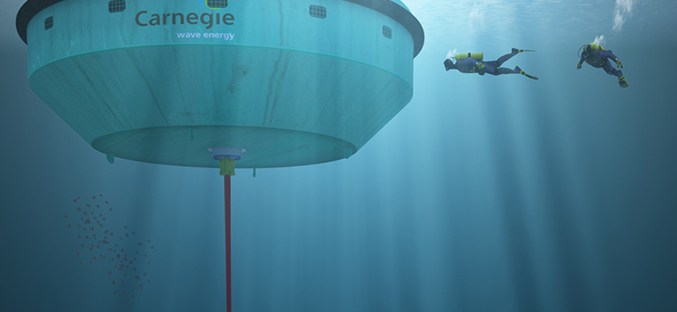
Australia’s Wave Energy System

Australia’s wave energy system proposal, the Perth Wave Energy Project, utilizes the motion and pressure of the ocean’s waves to convert into an energy source on land. The method functions by placing generators that acts as buoys in the water that essentially move back and forth, up and down with the currents to then translate the wave’s energy into electricity. As of March 15, 2015 the first wave farm of its caliber is up and running in Western Australia, and is projected to continue growth immensely in the coming years. The project is a groundbreaking new tool for energy and water desalination that utilizes Australia’s wave-energy technology, CETO, named after the Greek ocean goddess, to produce zero-emission power and works towards reducing the overall need for fossil fuels. CETO has been made possible through various grants and funding by the Western Australian government, with hopes of successfully developing a full transition of the removal of reliance on fossil fuels for energy. Almost 60% of the world’s population is located near the shoreline, so CETO has the potential to reach more than half of our population and provide a sustainable energy source through capturing the natural motion of waves and transforming them into energy. Although the buoy units are large, they would be placed in deep water, minimalizing any obstruction to views near the ocean or the impact of potential destruction from breaking waves on the surface of the water. This technology could revolutionize the way our future world is powered, and shines light on the potential to eliminate the use of fossil fuels and other toxic products that provide the necessary energy sources needed for human sustainability.

The CETO technology model functions solely from the cooperation between our knowledge of predicted wave schedules and the translation of such energy back onto land. By utilizing resources in the water to create resources on land, CETO is directly contributing to the UN Sustainable Developmental Goals focused on life on water and life on land. If the research, development and experimentation with the technology and infrastructure of CETO continue to progress, it is highly likely that this energy resource could replace other forms of energy, such as fossil fuels, that negatively impact our environment; thus, slowly returning our planet back to a healthier state.

Rose Kazanowski

Carnegie Wave Energy. (2015). Retrieved April, 2016, from http://carnegiewave.com/ Casey, T. (2015, March 15).

First-Of- Its-Kind Wave Energy Farm For Largest Naval Base In Australia. Clean Technica. Retrieved April, 2016, from http://cleantechnica.com/2015/03/15/first-kind- wave-energy- farm-largest- naval-base- australia/

Gallos, C. (2015). Carnegie’s CETO 5 Operational. Retrieved April, 2016, from http://www.wavehub.co.uk/latest-news/carnegies- ceto-5- operational

Ottaviano, M. (2016). Perth Wave Energy Project. Retrieved April, 2016, from http://arena.gov.au/project/perth-wave- energy-project/

Vorrath, S. (2016, January 27). Carnegie completes final milestone for CETO 5 Perth wave energy project. REneweconomy. Retrieved April, 2016, from http://reneweconomy.com.au/2016/carnegie-wave- 69826
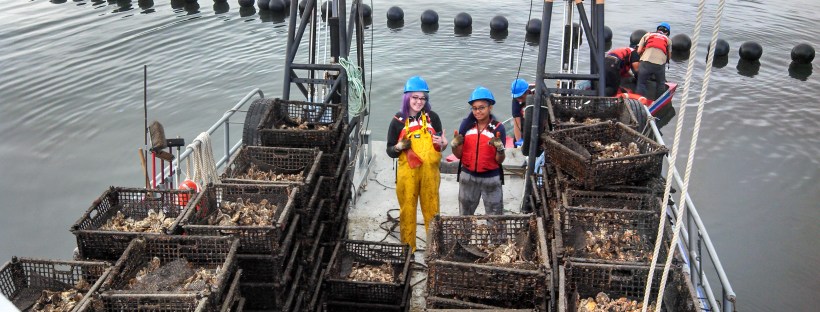
The Billion Oyster Project: Bringing back New York Harbor’s Ecosystem One Oyster at a Time

The Billion Oyster Project (BOP), started by the students at New York Harbor  School has worked to grow and restore oysters in the New York Harbor. Oysters reefs used to occupy over 220,000 acres of the Hudson River, and were a large part of the ecosystem. Oysters are known to filter the water around them, and provide a healthier habitat for other marine species and plants. Unfortunately, there are virtually no oysters left in the harbor because of pollution, over-harvesting, and dredging. The loss of oysters, and rise in water pollution, has rendered the current ecosystem unable to filter the water. Without the oysters, the Harbor reefs have disappeared and without these protective habitats the shoreline is more vulnerable to storms and destructive waves. BOP has five stand alone programs in place to restore the Harbors ecosystems that include: Oyster Production, BOP Schools, Reef Construction and Monitoring, Shell Collection, and Public Programs.

The Billion Oyster Project engages local students in hands on ways. In their mission statements, BOP says that students have “learned to SCUBA dive safely, raise oyster larvae, operate and maintain vessels, build and operate commercial-scaled oyster nurseries, design underwater monitoring equipment and conduct long-term authentic research projects all in the murky, contaminated, fast moving waters of one of the busiest ports in the county.” (BOP, 2016) One of their BOP Schools, the Harbor School, grows 10 million oysters a year and the students there are the ones that sustain the BOP’s projects. As of this year, BOP works in partnership with 36 public schools to provide these hands on opportunities to learn about science and math. Today there are more than eleven million oysters back in the New York Harbor thanks to BOP and it’s partners.

New York City always takes care of it’s own, and with a project like BOP, that directlybenefits the New York Harbors, many local businesses are getting in on the action. The Brooklyn Brewery and BOP have teamed up to create a limited edition oyster beer. The beer is called the Brooklyn Brewery’s Billion Oyster Saison, and was brewed with whole oysters! While this may sound strange to some, Irish brewers have been brewing with oysters for years and the taste is supposedly delicious. Garrett Oliver, the Brewmaster at Brooklyn Brewery, said that the collaboration with the BOP was easy since, “Water quality is incredibly important to us because it makes up about 95% of the beer we produce. Needless to say we take the issue very seriously and are happy to support the case in the best way we know-making a beer!” It will be premiered at the third annual Billion Oyster Party this May and will benefit the Billion Oyster Project, as well as the New York Harbor Foundation. Partnerships like these are mutually beneficial, and help to not only raise money but also awareness! With the kind of partnership and support that the Billion Oyster Project has received they are getting closer to their ambitious goal of restoring the reefs and bringing one billion oysters back into the New York Harbor every day!

Morgan McGoughran

Restore Our Harbor. (n.d.). Retrieved May 24, 2016, from http://www.billionoysterproject.org/about/

Brooklyn Brewery Promotes New York Harbor Restoration with Billion Oyster Saison Brewbound.com. (2016). Retrieved May 24, 2016, from http://www.brewbound.com news/brooklyn-brewery- promotes-new- york-harbor- restoration-billion- oyster-saison

Levine, A. S. (2016). New York Today: The Big Oyster. Retrieved May 24, 2016, from http://www.nytimes.com/2016/05/10/nyregion/new-york- today-the- big-oyster.html?_r=0

The Great (Green) Wall of Africa

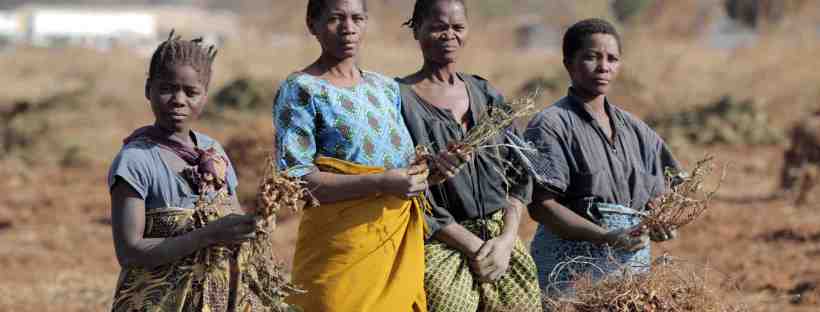
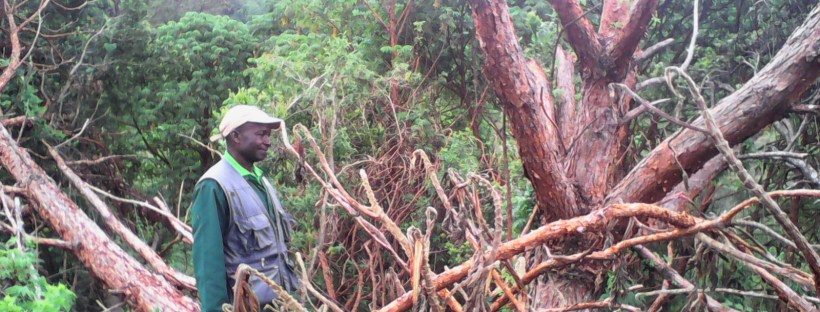
Africa is facing a very big problem: desertification. This is a problem that 40% of Africa is facing. Desertification results in land that is unsuitable for crops, and with many of the Sub-Saharan Africans dependent upon the land for jobs and food, poverty and hunger are running rampant. While this desertification may seem inevitable due to climate change, the Great Green Wall for the Sahara and the Sahel Initiative plans to make a valiant effort at stopping it. The plan is to plant an actual “wall of trees” in order to stave off further desertification in these areas. By replanting indigenous trees and plants that can withstand the arid climate, the Great Green Wall will need very little maintenance and basically take care of itself. In the areas where the ‘Wall’ has already been planted, they have seen an increase in indigenous animals that hadn’t been seen in these areas for the last 50 years. With amazing results (so far) in the areas that have really pushed the initiative, hope and revitalization are spreading as the wall does.

The Great Green Wall will be a group effort, involving all of the countries stretching from Dakar to Dijbouti. The plan is dependent upon cooperation between these countries, and as of right now 20 countries are partnered to make this Wall a reality. Stopping land degradation is vital to the well-being and prosperity of these suffering communities, which has acted as a great motivator for locals who don’t want to turn to other means of making a living or migrating to another area. Currently, each of the countries that has partnered with the Great Green Wall Initiative have created their own regional action plans to achieve this goal. In an interview concerning this level of cooperation, Elvis Paul Tangam, the African Union Commissioner for the Sahara and Sahel Great Green Wall Initiative, has said, “That is the biggest achievement, because now they own it. It’s about ownership, and that has been the failure of development aid, because people were identified with it. But this time they identify. This is our thing.”

Beside the more obvious problems of food security and poverty, land degradation in these regions also has social consequences. If these young men and women can no longer find jobs working on the farms or in the markets, they will need to look elsewhere for an income. Young men and women in Africa harbor the responsibility of providing for their families, and without arable land their options are limited and bleak. Many young men end up turning to different rebel and terrorist groups, like the Boko Haram, to help them earn a living and give them purpose. With the Great Green Wall Initiative moving along, many of these at risk young people are now participating in planting these new trees and protecting them. They are staying in their communities because they understand the land’s arability is returning, and by helping with this initiative, they are providing a valuable service.

Although the plans for the Great Green Wall were proposed in 2007, only about 15 percent of the actual ‘Wall’ has been planted at this time. Like any ambitious environmental goal, it takes time to get each individual country and region on board with the program before the actual action really begins. The UN has already stated that without intervention, nearly two-thirds of Africa’s arable land will be gone in the next ten years. Those kinds of statements only provide more motivation for projects such as the Great Green Wall Initiative to succeed, no matter how long it takes to finish. At this time, those most closely involved in the initiative believe it will take about 25 years to complete. For the sake of the arable land, I hope that generation-long timeline started in 2007 and is completed before it is too late.

Morgan McGoughran

Africa's Great Green Wall is making progress on two fronts. (2016). Retrieved from http://www.pri.org stories/2016-05- 02/africas-great- green-wall- making-progress- two-fronts

“You were and Accident!” How the Nanowire battery was Born

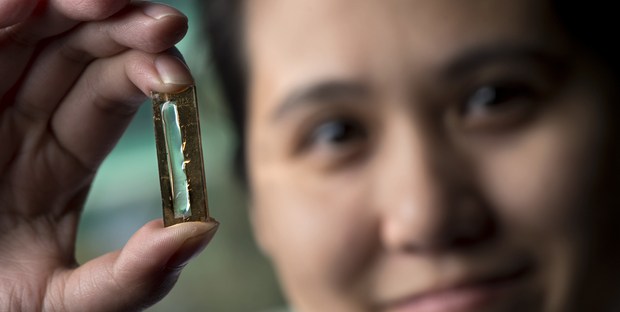
Batteries have long been the bane of the sustainable communities’ existence, but that may be about to change. Recently, a student at the University of California, Irvine accidentally invented a nanowire battery that charges faster and lasts longer. A group of researchers in the chemistry department were experimenting with replacing lithium with gold nanowires. Mya Le Thai, a PhD candidate at UCI, was the researcher who decided to coat the incredibly thin gold nanowires in manganese oxide and suspend them in a  protectiveelectrolyte gel. Now what are either of those things? I honestly have no idea, but I understand the basic need. See in the past, the nanowires tended to crack after a certain amount of charges, but with this new gel coating the nanowires are more pliable and able to withstand hundreds of thousands of charges. Aside from the gel coating, these gold nanowires are very conductive and have a larger surface area for storing energy.

These new nanowire batteries take 200,000 charges, nearly 400 times more than lithium batteries! They aren’t exactly sure why or how it all works, but they do know that the mechanism is replicable. Over the last three months, they have recharged this gel- coated nanowire battery and haven’t seen any loss in power, capacity, or cracking in the nanowires. These batteries will change the way that clean energy is stored, electric cars are produced and run, as well as many more benefits to energy needs. By replacing lithium batteries with these nanowire batteries, it will save consumers money by not having to replace these batteries as frequently. Without the lithium, these batteries will also be less vulnerable to overheating or combustion. Another plus, without having to replace batteries as often, there will be less waste caused by batteries in land fills.

With the discovery being so new, there are no current public plans or predicted costs for replication at a larger scale. There is no doubt that this will change very soon, since these batteries will completely change commercial battery use and benefit the  internationalcommunity.

Morgan McGoughran

[Mya Le Thai with her nanowire battery]. (2016). Retrieved from http://bigthink.com/robby-berman/scientists- accidentally-create- a-battery- that- can-outlast- your-device

The Waste-preneurs of South Africa

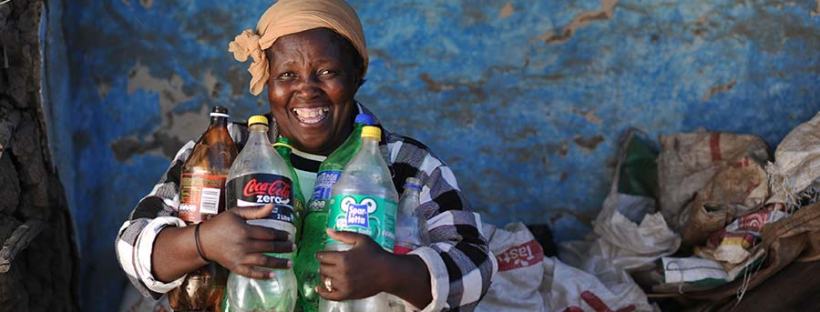
The Wildlands Conservation Trust of South Africa has created a Recycle for Life program that allows thousands of community members to collect recyclable waste and barter it to the Wildlands Trust for sustainable support. The program is a green economy initiative that promotes recycling, re-using and recovery of waste while creating jobs for under employed people in South Africa, giving opportunity for work to youth and women.

Waste collectors are linked with waste buyers interested in purchasing specific waste materials for their own re-use, such as aluminum cans, glass bottles, paper recycling, cardboard, plastics, and other recyclable materials. The Waste-preneurs collect and sort the waste, keeping the area clean and organized while also receiving an income from the buyers that can get use out of particular waste, in an effort to minimize the amount of waste going directly into landfills. This allows an abundance of recycled materials to be used more effectively. Some waste collectors receive goods or services in exchange for their efforts rather than pay, such as food and educational services.

Since 2010 the Waste-preneur program has grown immensely and this past year the Wildlands Trust has seen over 4,200 Waste-preneurs collect and trade 8.2 million kilograms of waste through their depots in exchange for livelihood support. The program currently incentivizes 86 schools and 71 businesses for recycling responsibly, and organizes clean up days on the national holiday, Mandela Day, and at different marathon races around the country.

Not only is this program providing a cleaner environment with increased well being for all, but it is also allowing people to sustain themselves better by creating a stronger sense of community that involves direct communication and exchange between groups for improved interconnectedness and quality of life. This program most noticeably works towards minimizing waste production with responsible consumption and production, while also working in line with many other SDGs such as reducing poverty and hunger through livelihood exchange, creating decent work opportunities and economic growth for many citizens, as well as educational opportunities for women and children; thus, improving the issue of inequality, while also helping to fight climate action, and create a better life on land. The best part of it all is that this program is completely replicable and easily scalable for any community to use in their own area. The only requirement for this program to be successful is participation and enthusiasm from the local community!

Alexa Bender

http://wildlands.co.za/project/recycling-for-life/

Recycling for Life – Wildlands. (n.d.). Retrieved May 22, 2016, from http://wildlands.co.za/project/recycling-for- life/

Wildlands ‘Wastepreneurs” | Go Yonder. (2013, April 2). Retrieved May 22, 2016, from http://www.goyonder.co.za/galleries/photographs/

Malaysian Villages go ‘Smart’

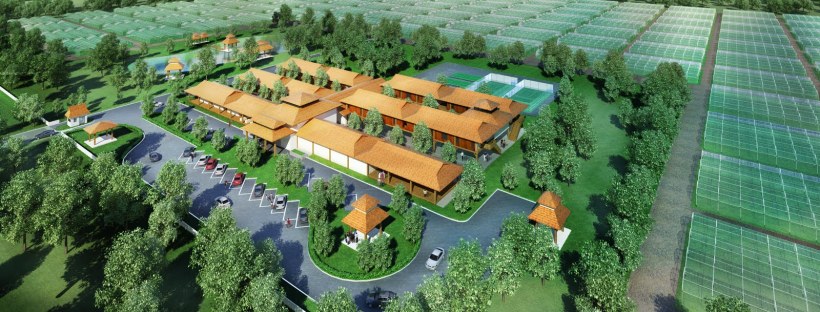
Smart Villages seek to provide the same opportunities and access for rural areas that urban cities maintain, making it possible for rural residents to have access to careers, clean water, healthcare, education, and communication—without leaving their remote and community-oriented villages. Originally, smart villages were created to tackle rural poverty in developing countries, through a public/private partnership with the UN Sustainable Development Solutions Network. This primary model, in Malaysia, is already being used all around the world to tackle impoverished areas in many different countries. The smart village in Malaysia has 100 homes built on about 50 acres of land, with access to educational, training, and recreational facilities, as well as sustainable agricultural systems, which provide a reliable food source and a supplementary income for residents. Additionally, this particular village has a four-level aquaculture system hosting guppies and algae, which provide food for larger fish like protein-rich tilapia. Filtered water from the fish tanks is also used to irrigate trees, flowers and crops. This system optimizes nutrient absorption, minimizes waste, and allows crops to grow on previously non-arable land. It uses a sort of “looping system” for a take on modern farming that can exist virtually anywhere, even in urban settings, making replication very realistic all around the world with few limitations.

This project helps provide a source of income for the intimate group of residents living in the village, and has essentially taken them out of poverty, while also improving their quality of living with more sustainable infrastructure, food, water, and agriculture. Smart villages are creating a network of small communities that make up a larger community of sustainable living that can eventually eliminate the pockets of severe poverty within and around the country. Further projects are being added to these villages, such as carbon reduction and biomass waste-to- wealth initiatives; demonstrating how these villages are simultaneously working towards many SDGs. These smart villages tackle the issues of poverty; hunger; good health and well-being; quality education; clean water and sanitation; affordable and clean energy, through self-sufficient solar panels complimented by biomass and hydro; decent work and economic growth within the village; sustainable innovation and infrastructure created to last; and most effectively model sustainable cities and communities that can be replicated all around the world. Finally, smart villages practice responsible consumption and production, ultimately affecting the global initiative to combat climate change.

Overall, this model is indeed very “smart” as it allows rural villages to have the same advantages of urbanized cities, on a much more intimate, community- based level. Each reproduced village can be tailored to its geographic location and cultural way of living because it is much more manageable and adaptable on a smaller scale. In terms of scalability, this project is intended to function on a small-scale in order to maintain the integrity and intimacy of the community practice and nature of the system. This particular model would still function if scaled slightly smaller or slightly larger, but ultimately, it would still need to be reproduced in a rural area with a community of residents that are all able to agree on a similar way of living as an entire unit

Alexa Bender

Knight, M. (2012, July 26). 'Smart Village' ties modernity with sustainable living. Retrieved May 22, 2016, from http://www.cnn.com/2012/07/26/world/asia/smart-village- malaysia/

Malaysia's 'Smart Villages' and 9 other proven ideas for sustainable development. (2014, September 17). Retrieved May 22, 2016, from http://www.eurekalert.org/pub_releases/2014-09/tca- mv091414.php

Singapore Water now on Tap

Singapore’s history of water control and sanitation is not a great one, as they have continually struggled with serious issues of flooding, water pollution, and droughts, offering very little access to clean water. However, they are taking a turn for the better, undergoing many new progressions in technology and management in recent years, leading them to find much more sustainable ways of managing their water resources effectively as a country.

PUB (Public Utilities Board) is Singapore’s National Water Agency that is responsible for the collection, production, distribution and reclamation of water in Singapore. The organization seeks to provide clean water for all through their diverse water supply plan called the “Four National Taps.”

The first tap consists of local catchment water, with systems that collect rainwater and used water on a large scale through a network of drains, canals, rivers, storm-water collection ponds and reservoirs before it is treated for drinking water supply. This makes Singapore one of the few countries in the world to harvest urban storm-water on a large-scale.

The second tap is imported water that is piped to Singapore from the Johor River Waterworks in Malaysia. The most recent agreement expires in 2061 and Singapore is on track to have a self-sustainable water supply by then, making this a substantial and feasible long-term plan of action for the country.

The third tap consists of highly-purified, reclaimed water known as NEWater, which is produced from treated, used water, purified using advanced membrane technologies and ultra-violet disinfection, making it very safe to drink. This NEWater plant currently provides about 30% of all of Singapore’s water needs.

The fourth and final tap is desalinated water that is created by reverse- osmosis, providing about 25% of Singapore’s overall water needs from two major plants. Both NEWater and desalinated water augment their own water supply, allowing Singapore to be more resilient to weather variability, helping to eliminate water issues due to flooding and droughts. This water supply model is known as “The Water Loop.”

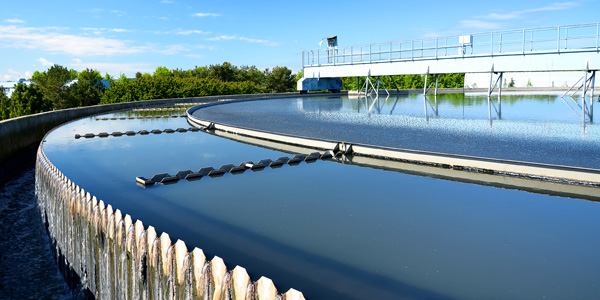
This cyclical system of accessible and equitable water sanitation and hygiene minimizes the outsourcing of toxic water through its highly effective sanitation plants. The cycle allows for natural resources and water systems to be preserved, while harvesting and recycling water through NEWater and desalination processes. Not to mention, this system engages in partnerships with other surrounding areas through import agreements, ultimately providing diverse water resources for the country. This model has successfully conquered the issue of clean water and sanitation of the United Nations’ 2016 Sustainable Development Goals (SDGs) for the people of Singapore. Additionally, these plants create more jobs for Singapore residents and keep water sources both local and affordable; thus, contributing to other Sustainable Development Goals of eliminating poverty, creating good health and well-being, decent work, sustainable infrastructure and communities, as well as partnership and responsible consumption production.

Furthermore, the country has been able to develop a plan that conserves more water annually. The ABC Waters Programme transforms Singapore’s water reservoirs into beautiful, clean streams, rivers and lakes for open access to the public to bring communities together and appreciate their access to clean water resources.

This project is very specific to Singapore, as its situation was developed in response to its major water issues of drought, and flooding, and was created in relationship to its surrounding countries. This exact model could not be replicated everywhere, but most definitely in countries with similar weather patterns and land characteristics. Although some countries may not have the capability to make water import agreements with other countries, they could most certainly replicate the technology used in the third and fourth taps to produce their own clean water solutions, as well as develop catchments for storm-water to be purified and reused. These taps would all most likely require government funding to create the appropriate infrastructure in order to utilize these methods, but beyond that issue, these methods are easily replicable by other cities around the world. The model could most definitely be done on a smaller scale, but would be much more worth while, economically, to be created on a larger scale to benefit a more substantial number of people. One limitation with this project is its dependence upon the city having a significant enough amount of storm water to be utilized, as well as access to rivers and canals for drain networking to be created. Therefore, this model could not so easily be reproduced in a desert climate or landlocked areas. What is so beautiful about this example is how the National Taps take into consideration Mother Nature’s natural water patterns in order to help the country better survive and work with nature, to use its resources most effectively, rather than working against the natural systems of life.

Alexa Bender

Singapore, http://www.iesingapore.gov.sg/Partner-Singapore/Singapore- Industry-Capabilities/Environment-and- Infrastructure-Solutions/Water/Sector- Information

Four national taps provide water for all. (2016, March 23). Retrieved May 22, 2016, from http://www.pub.gov.sg/water/Pages/default.aspx

Singapore is about more than chewing gum. (2016, April 19). Retrieved May 22, 2016, from https://www.globalcitizen.org/en/content/singapore-is- about-more- than-chewing- gum/

The Singapore water story. (2016, April 25). Retrieved May 22, 2016, from http://www.pub.gov.sg/water/Pages/singaporewaterstory.aspx

The Seabin Project

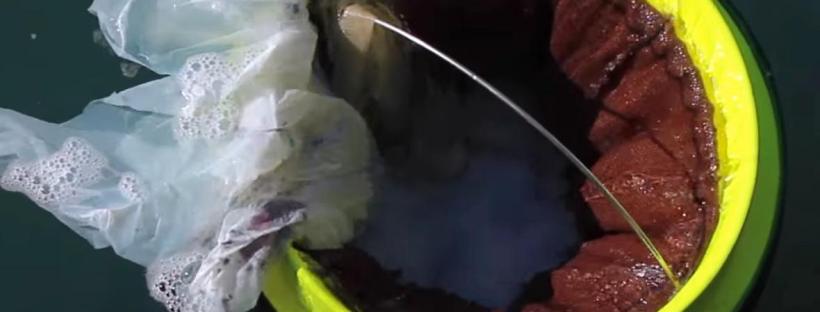
Sea pollution is a serious issue that exists in our oceans today, so bad that it is now its own ecosystem and is created mostly through human shoreline activities. A team of two Australians; Andrew Turton and Pete Ceglinski want to clean the world’s ocean one bin at a time. First, they wanted to create a system similar to an automated pool cleaner for marinas, harbors, ports, rivers, and lakes. The design of the bin is made up of 70 to 100 percent recycled polyththylene plastic and automatically collects rubbish, fuel, detergents and other debris from the surrounding water; essentially becoming a trash can for the ocean. The bin itself floats by docks of marinas, harbors yacht clubs, and other similar aquatic locations. Seabin started with these areas specifically because of debris that easily collect in these areas due to heavy boat traffic and prevailing winds; and in comparison are often calm waters as opposed to the storminess of the open ocean.

The floating bins are connected via pipes to a shore-based water pump that pulls water through the bin. Water flows through the container, where a natural fiber bag is used to collect the debris that is present in the water. After the waste is filtered out, the water flows through the pump system where it can be cleaned even further using a water/oil separator. After processing, the water then is pumped back into the ocean. The Seabin works 24/7, collecting debris in the bag and holding it near the bin when it is full. The best part about this design is the size simply because it only requires ONE operator to scoop the floating debris and change the bag without assistance.

As of right now the Seabin has raised more than$240,000 dollars to push further projects after a successful prototype in Mallorca, Spain. Although the price of one bin ranges close to $4,00 dollars no fish are harmed and debris is cleaned. Hopefully we can get Seabin to exist in the rivers of New York City.

Mattie Love

http://www.treehugger.com/sustainable-product- design/seabin-floating- invention-filters-plastic-pollution- out-water.html

Water Works in Lufumbu

Lufumbu is a small village in South West Tanzania that exemplifies how a community can come together and create great change. Lufumbu mostly relies on agriculture for income and due to the low water infrastructures crops and the community suffer. In Sub-Saharan Africa the shortage in water infrastructures exists for mainly two reasons being; a village’s location and poor access roads. In 1992, the government created a survey to assess the communities in desperate need of water projects constructed under government funds; unfortunately Lufumbu was not a chosen community. Although, the government did not choose Lufumbu, the community came together to find a way to establish a water supply scheme of their own.

The scheme chosen was designed by villagers and water technicians. The water tank relies on a simple gravity principle that uses locally obtaniably materials; stones and corrugated iron sheets.

The Cost of $50,000 was met through:

The Roman Catholic Church (10%)

The United Nations Development Program (42%)

The Villagers (48%)

The water scheme has 56 drawing points, with 10 kilometers of mains, and a resovoir tank of 60,000 liters. This layout is not only efficient but great because it allows for the whole community to reach a drawing point. Throughout the help of the entire community the project only took 4 ½ months to complete.

Some of the many benefits of this water scheme include:

  •  Significant reduction in water borne diseases
  •  Increase in agriculture production
  •  Expansion in coffee farming
  •  Housing benefits/upgrades to brick homes (327 modern brick houses)
  •  Afforestation and reforestation in valleys and hills
  •  Impact on women’s living conditions

The success of the Lufumbu Water Project has been a driving force for the District Government in not only adopting the invention but by implementing Lufumbu’s water design in all community-based water schemes.

Mattie Love

Click to access lufumbu.pdf

Jumbo Sized Shrimp

There has been a ground­breaking innovation in the shrimp industry! Shrimp farming to be precise. The input is a special bacteria and the product is healthy, nutritious shrimp that have the potential to feed countless people around the world and in desperately poor countries.

The shrimping farming industry has been frowned upon in recent years despite its making up 55% of shrimp production throughout the entire world. Shrimp farming has been known to have the potential of destroying ecosystems and polluting the environment, along with using a large amount of energy.

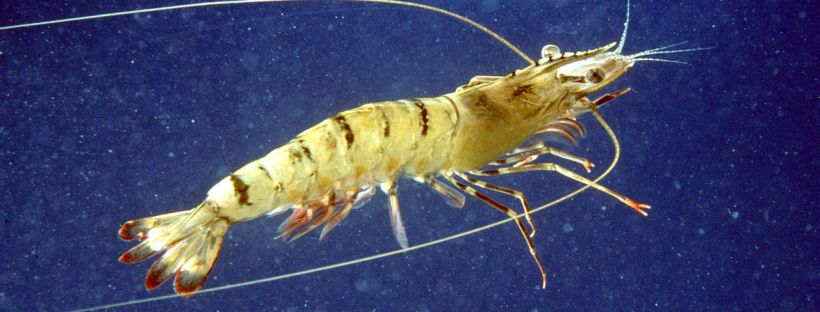
A brand new start­up working to make shrimp farming more sustainable. The start­up, Marizca, was initiated by biochemical engineering students at University College in London, and have developed indoor facilities in which shrimp can live, feed, and grow. The shrimp feed on a certain bacteria that also filters the water that it shares with the shrimp. The bacteria consumes the waste from the shrimp and when the bacteria reaches an appropriate size, the shrimp consume it. The microorganisms make up 30% of what the shrimp need to consume and due to the water­purifying capabilities of the bacteria, a large amount of water and electricity are saved. These facilities, if they begin so spread, will also decrease the amount of pollution caused by other methods of shrimp farming. The founder believes that these methods could be used in third­world and food deprived areas of the world and benefit starving people tremendously. The
pods used are simple to assemble, easily transported and have the potential to be run purely on solar power. Much like other cases, the founder believes that the practice will be beneficial for the world if it were widely adopted. Still working on licensing and finding the right NGO to work with, “the first batch of Marizca’s London­produced shrimp will be on sale within the year.”

This is the kind of technological innovation that targets several of the sustainable development goals that were laid out by the UN in order to promote a more sustainable way of living life and ensuring a safe and healthy planet for future generations. These goals most clearly include the war on hunger and the initiative to spread good health and well­being. Responsible production and consumption are at the heart of this project and while it is yet to be attempted as a large scale operation it certainly has the potential to feed a lot of tragically underfed people.

Kyle Noviello

Marine shrimp farming on wikipedia.org.

Dobrovolny, M. (2014, September 13). http://www.scidev.net.

http://www.scidev.net/global/fisheries/news/start­up­promises­to­revolutionise­shrimp­farming.html