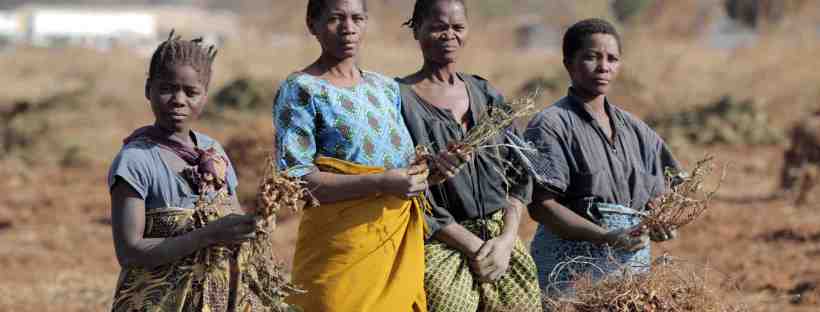
Africa is facing a very big problem: desertification. This is a problem that 40% of Africa is facing. Desertification results in land that is unsuitable for crops, and with many of the Sub-Saharan Africans dependent upon the land for jobs and food, poverty and hunger are running rampant. While this desertification may seem inevitable due to climate change, the Great Green Wall for the Sahara and the Sahel Initiative plans to make a valiant effort at stopping it. The plan is to plant an actual “wall of trees” in order to stave off further desertification in these areas. By replanting indigenous trees and plants that can withstand the arid climate, the Great Green Wall will need very little maintenance and basically take care of itself. In the areas where the ‘Wall’ has already been planted, they have seen an increase in indigenous animals that hadn’t been seen in these areas for the last 50 years. With amazing results (so far) in the areas that have really pushed the initiative, hope and revitalization are spreading as the wall does.
The Great Green Wall will be a group effort, involving all of the countries stretching from Dakar to Dijbouti. The plan is dependent upon cooperation between these countries, and as of right now 20 countries are partnered to make this Wall a reality. Stopping land degradation is vital to the well-being and prosperity of these suffering communities, which has acted as a great motivator for locals who don’t want to turn to other means of making a living or migrating to another area. Currently, each of the countries that has partnered with the Great Green Wall Initiative have created their own regional action plans to achieve this goal. In an interview concerning this level of cooperation, Elvis Paul Tangam, the African Union Commissioner for the Sahara and Sahel Great Green Wall Initiative, has said, “That is the biggest achievement, because now they own it. It’s about ownership, and that has been the failure of development aid, because people were identified with it. But this time they identify. This is our thing.”
Beside the more obvious problems of food security and poverty, land degradation in these regions also has social consequences. If these young men and women can no longer find jobs working on the farms or in the markets, they will need to look elsewhere for an income. Young men and women in Africa harbor the responsibility of providing for their families, and without arable land their options are limited and bleak. Many young men end up turning to different rebel and terrorist groups, like the Boko Haram, to help them earn a living and give them purpose. With the Great Green Wall Initiative moving along, many of these at risk young people are now participating in planting these new trees and protecting them. They are staying in their communities because they understand the land’s arability is returning, and by helping with this initiative, they are providing a valuable service.
Although the plans for the Great Green Wall were proposed in 2007, only about 15 percent of the actual ‘Wall’ has been planted at this time. Like any ambitious environmental goal, it takes time to get each individual country and region on board with the program before the actual action really begins. The UN has already stated that without intervention, nearly two-thirds of Africa’s arable land will be gone in the next ten years. Those kinds of statements only provide more motivation for projects such as the Great Green Wall Initiative to succeed, no matter how long it takes to finish. At this time, those most closely involved in the initiative believe it will take about 25 years to complete. For the sake of the arable land, I hope that generation-long timeline started in 2007 and is completed before it is too late.
Morgan McGoughran
Africa's Great Green Wall is making progress on two fronts. (2016). Retrieved from http://www.pri.org stories /2016-05- 02/africas-great- green-wall- making-progress- two-fronts
 Sustainable Journeys