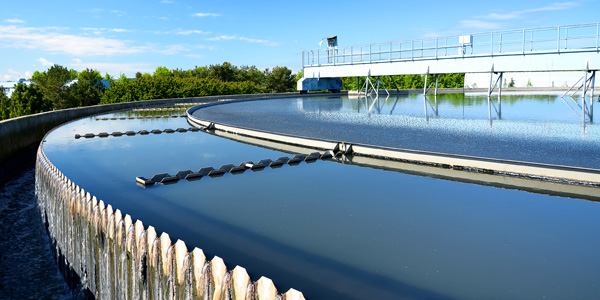
Singapore’s history of water control and sanitation is not a great one, as they have continually struggled with serious issues of flooding, water pollution, and droughts, offering very little access to clean water. However, they are taking a turn for the better, undergoing many new progressions in technology and management in recent years, leading them to find much more sustainable ways of managing their water resources effectively as a country.
PUB (Public Utilities Board) is Singapore’s National Water Agency that is responsible for the collection, production, distribution and reclamation of water in Singapore. The organization seeks to provide clean water for all through their diverse water supply plan called the “Four National Taps.”
The first tap consists of local catchment water, with systems that collect rainwater and used water on a large scale through a network of drains, canals, rivers, storm-water collection ponds and reservoirs before it is treated for drinking water supply. This makes Singapore one of the few countries in the world to harvest urban storm-water on a large-scale.
The second tap is imported water that is piped to Singapore from the Johor River Waterworks in Malaysia. The most recent agreement expires in 2061 and Singapore is on track to have a self-sustainable water supply by then, making this a substantial and feasible long-term plan of action for the country.
The third tap consists of highly-purified, reclaimed water known as NEWater, which is produced from treated, used water, purified using advanced membrane technologies and ultra-violet disinfection, making it very safe to drink. This NEWater plant currently provides about 30% of all of Singapore’s water needs.
The fourth and final tap is desalinated water that is created by reverse- osmosis, providing about 25% of Singapore’s overall water needs from two major plants. Both NEWater and desalinated water augment their own water supply, allowing Singapore to be more resilient to weather variability, helping to eliminate water issues due to flooding and droughts. This water supply model is known as “The Water Loop.”
This cyclical system of accessible and equitable water sanitation and hygiene minimizes the outsourcing of toxic water through its highly effective sanitation plants. The cycle allows for natural resources and water systems to be preserved, while harvesting and recycling water through NEWater and desalination processes. Not to mention, this system engages in partnerships with other surrounding areas through import agreements, ultimately providing diverse water resources for the country. This model has successfully conquered the issue of clean water and sanitation of the United Nations’ 2016 Sustainable Development Goals (SDGs) for the people of Singapore. Additionally, these plants create more jobs for Singapore residents and keep water sources both local and affordable; thus, contributing to other Sustainable Development Goals of eliminating poverty, creating good health and well-being, decent work, sustainable infrastructure and communities, as well as partnership and responsible consumption production.
Furthermore, the country has been able to develop a plan that conserves more water annually. The ABC Waters Programme transforms Singapore’s water reservoirs into beautiful, clean streams, rivers and lakes for open access to the public to bring communities together and appreciate their access to clean water resources.
This project is very specific to Singapore, as its situation was developed in response to its major water issues of drought, and flooding, and was created in relationship to its surrounding countries. This exact model could not be replicated everywhere, but most definitely in countries with similar weather patterns and land characteristics. Although some countries may not have the capability to make water import agreements with other countries, they could most certainly replicate the technology used in the third and fourth taps to produce their own clean water solutions, as well as develop catchments for storm-water to be purified and reused. These taps would all most likely require government funding to create the appropriate infrastructure in order to utilize these methods, but beyond that issue, these methods are easily replicable by other cities around the world. The model could most definitely be done on a smaller scale, but would be much more worth while, economically, to be created on a larger scale to benefit a more substantial number of people. One limitation with this project is its dependence upon the city having a significant enough amount of storm water to be utilized, as well as access to rivers and canals for drain networking to be created. Therefore, this model could not so easily be reproduced in a desert climate or landlocked areas. What is so beautiful about this example is how the National Taps take into consideration Mother Nature’s natural water patterns in order to help the country better survive and work with nature, to use its resources most effectively, rather than working against the natural systems of life.
Alexa Bender
Singapore, http://www.iesingapore.gov.sg/Partner-Singapore/Singapore- Industry-Capabilities/Environment-and- Infrastructure-Solutions/Water/Sector- Information
Four national taps provide water for all. (2016, March 23). Retrieved May 22, 2016, from http://www.pub.gov.sg/water/Pages/default.aspx
Singapore is about more than chewing gum. (2016, April 19). Retrieved May 22, 2016, from https://www.globalcitizen.org/en/content/singapore-is- about-more- than-chewing- gum/
The Singapore water story. (2016, April 25). Retrieved May 22, 2016, from http://www.pub.gov.sg/water/Pages/singaporewaterstory.aspx
 Sustainable Journeys