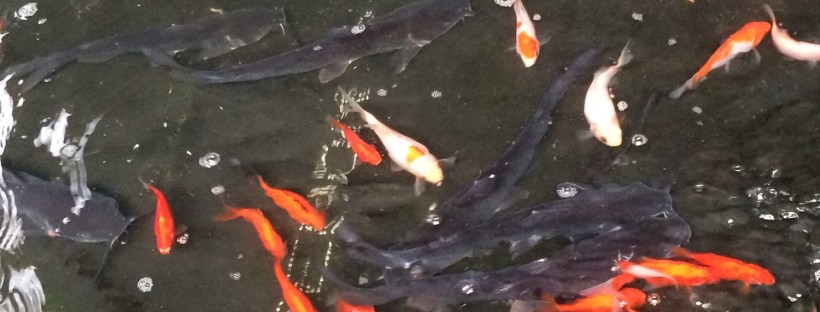
Moore Street Farm is a unique collaborative between Oko Farms and the Brooklyn Economic Development Corporation (BEDC). It is a 2,500 square foot education and production farm in Bushwick, Brooklyn and the largest outdoor aquaponics farm in New York City. This system allows both fish and vegetables to be raised in the limited spaces of such a compact city, making it very usable in densely populated urban settings. The farm cultivates a variety of freshwater fish including catfish, tilapia and crawfish along with a variety of vegetables and herbs. This farm uses aquaponics, a system in which the waste produced by farmed fish or other aquatic animals supplies nutrients for plants grown hydroponically, which ultimately purifies the water in order to grow nutrient dense foods with clean water.
The constant cycling of nutrients in the waste is a very efficient recycling system that eliminates toxic run-off that is typically present in most current methods of fish farming. This method helps reduce pollution and the carbon footprint, specifically in NYC, although this system is easily replicable in basically any other geographic location around the world, as it does not require much space or many natural resources to operate. Aquaponics systems reduce the amount of toxins consumed by humans who commonly eat farmed fish, ultimately helping to reduce health concerns for consumers. Additionally, it allows growers to produce and sell organic, local products within their immediate urban setting, reducing transportation time and costs, and making selling prices much cheaper for local customers.
This cyclical system is incredibly efficient with essentially no waste, thus it works in conjunction with many of the Sustainable Development Goals, in an effort to combat hunger and poverty, by making it possible to offer cheaper prices for locally produced foods, providing more accessibility to good health and well-being, with organic and nutrient dense foods being produced. The system operates with clean water and sanitation through its filtering plants, with innovative sustainable infrastructure, contributing to the creation of sustainable communities with a high regard for responsible consumption and production. Thus, this simple yet effective system creates a ripple effect that can help so many people lead much more sustainable lives.
The aquaponics system has very few limitations that would prevent it from working in any location; nonetheless, the scalability is dependent upon the support from the community. Aquaponics , on a small scale would work for individuals or a small group of people rather easily; however, for a larger system to be installed in a community, for business profits rather than personal use, it would most likely require a community that is eager to support and eat such specifically raised foods. Furthermore, large-scale production would require enough funding from either government or local contributors to obtain the proper equipment. In general, the system allows for great flexibility of products that can be grown depending on the particular demands of the local consumer market and geographic resources available to farmers in the area.
Alexa Bender
Kadish, J. (2014, November 21). Forget Chicken Coops-Fish Ponds Could Be the Future of Urban Farming. Retrieved May 22, 2016, from http://www.aquaponicsnyc.com/
Oko Farms. (n.d.). Retrieved May 22, 2016, from http://www.okofarms.com/
 Sustainable Journeys