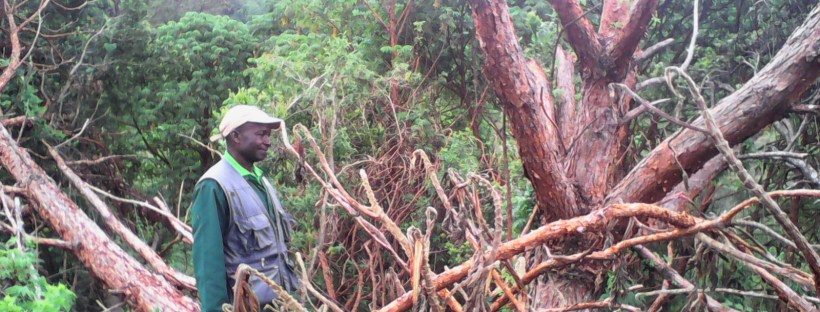
Lufumbu is a small village in South West Tanzania that exemplifies how a community can come together and create great change. Lufumbu mostly relies on agriculture for income and due to the low water infrastructures crops and the community suffer. In Sub-Saharan Africa the shortage in water infrastructures exists for mainly two reasons being; a village’s location and poor access roads. In 1992, the government created a survey to assess the communities in desperate need of water projects constructed under government funds; unfortunately Lufumbu was not a chosen community. Although, the government did not choose Lufumbu, the community came together to find a way to establish a water supply scheme of their own.
The scheme chosen was designed by villagers and water technicians. The water tank relies on a simple gravity principle that uses locally obtaniably materials; stones and corrugated iron sheets.
The Cost of $50,000 was met through:
The Roman Catholic Church (10%)
The United Nations Development Program (42%)
The Villagers (48%)
The water scheme has 56 drawing points, with 10 kilometers of mains, and a resovoir tank of 60,000 liters. This layout is not only efficient but great because it allows for the whole community to reach a drawing point. Throughout the help of the entire community the project only took 4 ½ months to complete.
Some of the many benefits of this water scheme include:
- Significant reduction in water borne diseases
- Increase in agriculture production
- Expansion in coffee farming
- Housing benefits/upgrades to brick homes (327 modern brick houses)
- Afforestation and reforestation in valleys and hills
- Impact on women’s living conditions
The success of the Lufumbu Water Project has been a driving force for the District Government in not only adopting the invention but by implementing Lufumbu’s water design in all community-based water schemes.
Mattie Love
 Sustainable Journeys